
Why Core Strength Matters
Our core is not only our abs. Our core is our entire midsection including abs, obliques, our lower back, hips, and glutes. Think of our core as everything that connects the upper body to the lower body, and keeps everything all from flying all over while we run. A strong core keeps our pelvis stable, posture upright, and form intact when we are tired but still pushing in the final mile of a race. Without it, energy leaks out through exhausted hips and a collapsing trunk, and our legs have to work harder. Core work also helps prevent injuries, particularly the hip and lower back problems that sideline runners every season.
As distance runners, our legs get plenty of attention — but our core holds everything together. The good news is that we don’t need a coach standing over us to get a solid core session in. We already know the exercises. Here is a simple framework to help you and your friends put together a solid core workout on your own.
You Already Know About Core Workout Planning More Than You Think
Think about all the exercises you’ve done in practice — planks, lunges, runner’s touch, bird dogs, fire hydrant, climb the rope, side planks, bananas, leg lifts, pushups, elbow-to-knee touch, dead bugs, bicycles, clamshells, single-leg glute bridges, Superman holds. You have a library of movements in your head. And, a quick search on your phone can find some more – the exercises your coach teaches are not all the useful exercises out there. The goal for a do-it-yourself core session is not necessarily to learn something new. Our goal is to put what you already know together in a way that hits all the boxes to make our core stronger. You can become more self-sufficient in your training.
Four Starting Positions, Three Rounds of Exercises
A well-rounded core workout hits your muscles from every angle. The easiest way to do that on your own is to pick one exercise from each of four body positions, then cycle through all four as a circuit. If you are with a group, take turns picking the exercise, everyone will remember an exercise or three. Do three full circuits.
Here’s how to include every core group in your session:
1. On Our Feet — Leg and Hip Focus. Pick a standing or upright exercise that challenges legs, hips, and balance. Think about all sorts of lunges, body weight squats (single or double leg), single-leg deadlifts, calf raises, step-ups, side leg raises, standing band work (if you have a band). Why we do these exercises: Training hip strength, balance and stability on our feet directly carries over to our strides. When we are running, every time a foot hits the ground we have to balance. Being strong and stable keeps our running efficient even when we start to get tired.
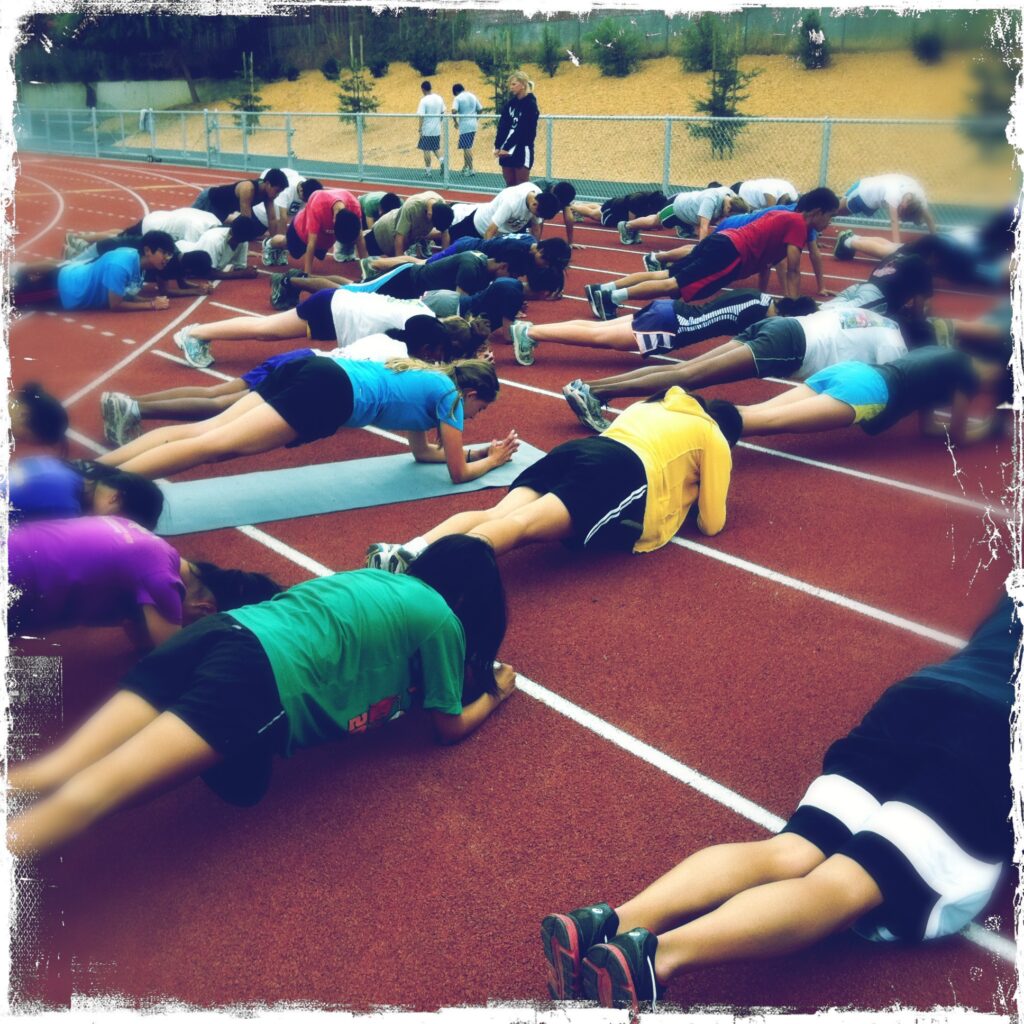
2. On Hands and Knees — Back and Stability Focus. Pick an exercise on all fours that requires you to control your spine and move an arm or leg while keeping hips rock solid. Plank is one exercise for this group that has plenty of variations (straight plank, plank lifting a leg or arm, up-and-down from plank, thread the needle). Bird dog is also a classic. MVXC does a lot of fire hydrants and donkey kicks for this area. Why it’s here: These movements help our back and hips to stabilize under load. With every stride, our arms and legs are swinging, and these core exercises connect those movements.
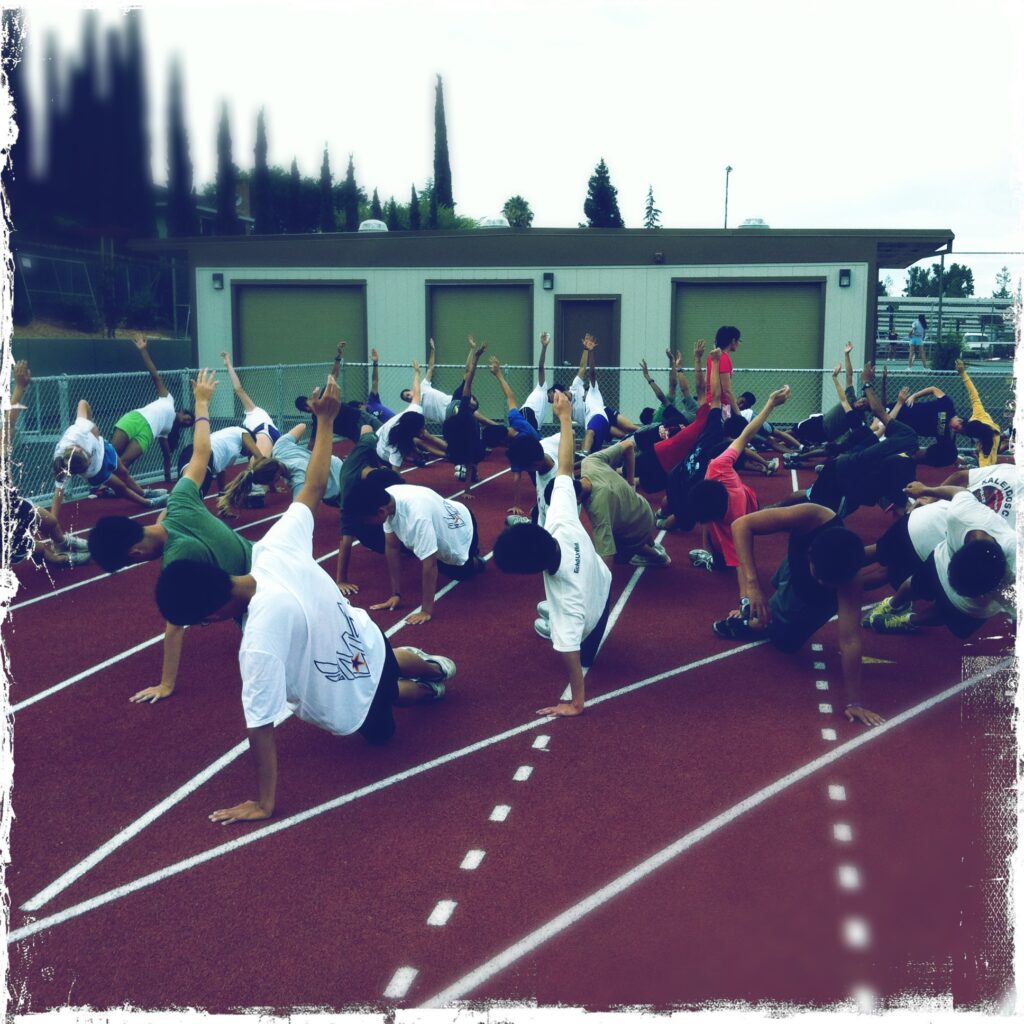
3. On Our Sides — Lateral Core Focus. Pick a side-lying exercise. Side plank, side plank with hip dips, bananas, elbow to knee touch, leg lifts, or clamshells (especially if you have a band) all fit here. Why it’s here: Runners are strong front-to-back but often weak side-to-side. Teenagers tend to have less strength on the outer hip and sides of their cores. Lateral core strength keeps your hips from dropping.
4. On Our Backs — Abdominal Focus Pick an exercise lying on your back that works your abs. Bicycles, dead bugs, crunches, cake mixer, climb the rope, leg raises, or glute bridges—all the classic core exercises are in this group. Why it’s here: Your abdominals anchor your pelvis and protect your lower back. Finishing on your back is also a natural way to cool down.
Finish with an extended plank session—plank the MVXC way!
Run through all four positions back-to-back, rest for 60 seconds or so, then repeat; go for three total circuits. Pick different exercises each circuit if you can, though repeating can still be OK if you can’t come up with something creative. Exercises that challenge you and your friends but that you can perform with good form will build strength. Don’t do exercises you are struggling to perform properly— this will build bad habits and not get the results we want. Do exercises you can manage and move to harder things over time.
Keep Showing Up
You don’t need to do perfect Instagrammable workouts. Consistency is what matters. Ten to 20 minutes of focused core several times a week will build real strength this summer. Mix up your exercise choices so it stays fresh and you attack muscle groups in different ways. Push yourself to progress — hold positions longer, add reps, or choose a harder variation as the movements get easier. Encourage your friends.Your legs will thank you at Crystal when you hit Cardiac!