

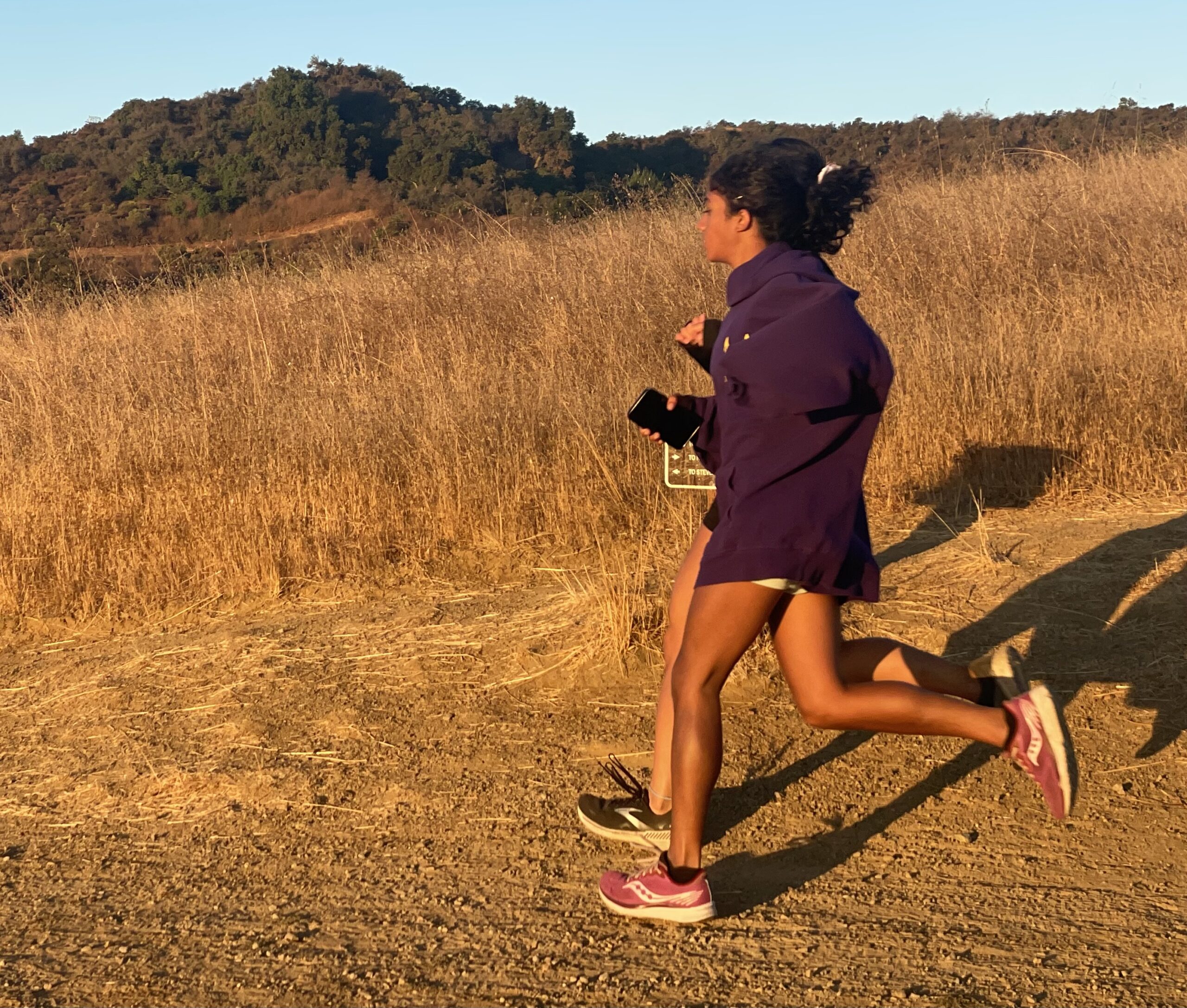
“Some people interpret the discomfort of growth as a reason to stop.”
–Martin Seligman
“Top performers learn to be comfortable with being uncomfortable.”
–Angela Duckworth
We are now getting close to wrapping up our third week of summer running. I’m proud of you, and I hope that you are proud of yourself and the effort you have made and the fitness you have gained. Maybe you are starting to really develop a rhythm to your day–getting up and banging out your miles with your friends as the sun comes up. Maybe you are hitting a tough spot, mentally or physically. Maybe you are excited that a run that felt hard in the first week felt a little better today. All these feelings are reasonable. These feelings can occur as we challenge ourselves to improve and grow, in our running or in other areas.
The quotations above mean a lot to me. Over the past decade, I’ve learned a great deal from Angela Duckworth, and Marty Seligman—who founded my master’s program at the University of Pennsylvania—taught one of the first classes I took there.
As you reflect on your summer running so far, look ahead to the coming weeks, and start thinking about the 2025 cross country season, I believe these quotes might resonate with you as well.
Here are a few questions to help you reflect on their meaning:
- What do you think of when you read these quotations? What does it mean to you?
- How do you react when you feel uncomfortable during training or a race? Remember, discomfort is not a sign of weakness, but a shared experience among all of us. Can you share a specific memory of when you pushed through discomfort?
- How can our team culture support each other in our struggles as we face discomfort and accept or overcome uncomfortable challenges?
- What strategies might you use to help you become more comfortable with being uncomfortable, especially in the most challenging moments?*
- In what ways can embracing discomfort lead to better performance at practice or when we are racing?^
- Can you relate the ideas in these quotes to more than our team and running? What about other parts of your life, such as academics or a job?
These quotations could look good on your bedroom wall or bathroom mirror or on a bookmark in the textbook for your most difficult class next Fall.

*Angela Duckworth suggests that we don’t have to always enlist a white-knuckled, grab-the-steering-wheel, brute-force-willpower approach. Grit is only one of the tools available. For example, if we have a long and challenging run scheduled for this weekend, we could plan the run for the coolest part of the weekend, with friends, on a pleasant route. Can you think of other ways to change the situation and make a hard thing easier—not just in athletics, but other hard things, such as studying math or learning Spanish or tackling a chore?
^Some researchers argue that actively seeking discomfort on the path to growth is a successful strategy. See Wooley & Fishbach, Motivating personal growth by seeking discomfort, Psychological Science, 2022.